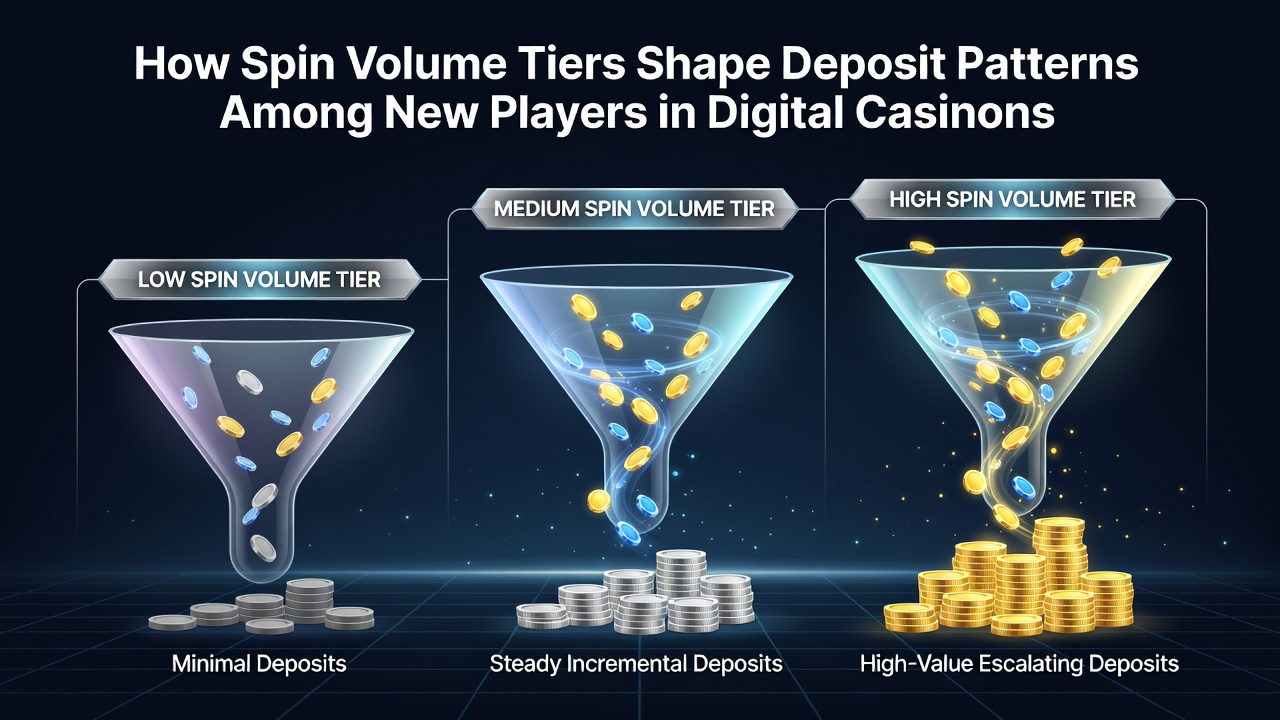
How Spin Volume Tiers Shape Deposit Patterns Among New Players in Digital Casinos
Digital casinos organize player activity into spin volume tiers that track the number of spins completed over defined periods, and these tiers directly influence how new players manage their deposits. Platforms calculate tiers based on cumulative spins rather than total wagered amounts alone, which creates distinct behavioral patterns during the first weeks of play. Researchers tracking account data across multiple operators note that players who reach higher spin tiers within the initial 30 days tend to adjust deposit sizes and timing more frequently than those who remain at lower volumes.
Defining Spin Volume Tiers in Practice
Operators typically divide new accounts into tiers such as bronze for under 500 spins, silver for 500 to 2,000 spins, and gold beyond that threshold, with each level unlocking different promotional mechanics tied to deposit activity. Data compiled through 2026 shows that tier progression often coincides with changes in deposit frequency, as players respond to the visibility of their current status on account dashboards. Those who study player logs observe that the jump from bronze to silver frequently triggers an increase in smaller, more regular deposits rather than larger one-time transfers.
Early Deposit Responses to Tier Placement
New players assigned to lower tiers at signup display deposit patterns that cluster around promotional triggers, while movement into mid-level tiers correlates with steadier deposit intervals. Figures released by the New Jersey Division of Gaming Enforcement in reports covering the first half of 2026 indicate that accounts reaching silver tier status within 14 days averaged 1.8 deposits per week compared with 1.1 deposits for those staying in bronze. The difference appears tied to automated messages that highlight remaining spins needed for the next tier, prompting players to fund accounts to maintain momentum.
What's notable is how the structure of these tiers affects deposit sizing. Players who accumulate spins quickly often reduce individual deposit amounts after reaching a new tier, spreading funds across multiple sessions instead of committing larger sums upfront. Analysts examining transaction records find this pattern holds across both desktop and mobile interfaces, though mobile users reach tier thresholds slightly faster on average.
Mid-Game Adjustments and Retention Metrics
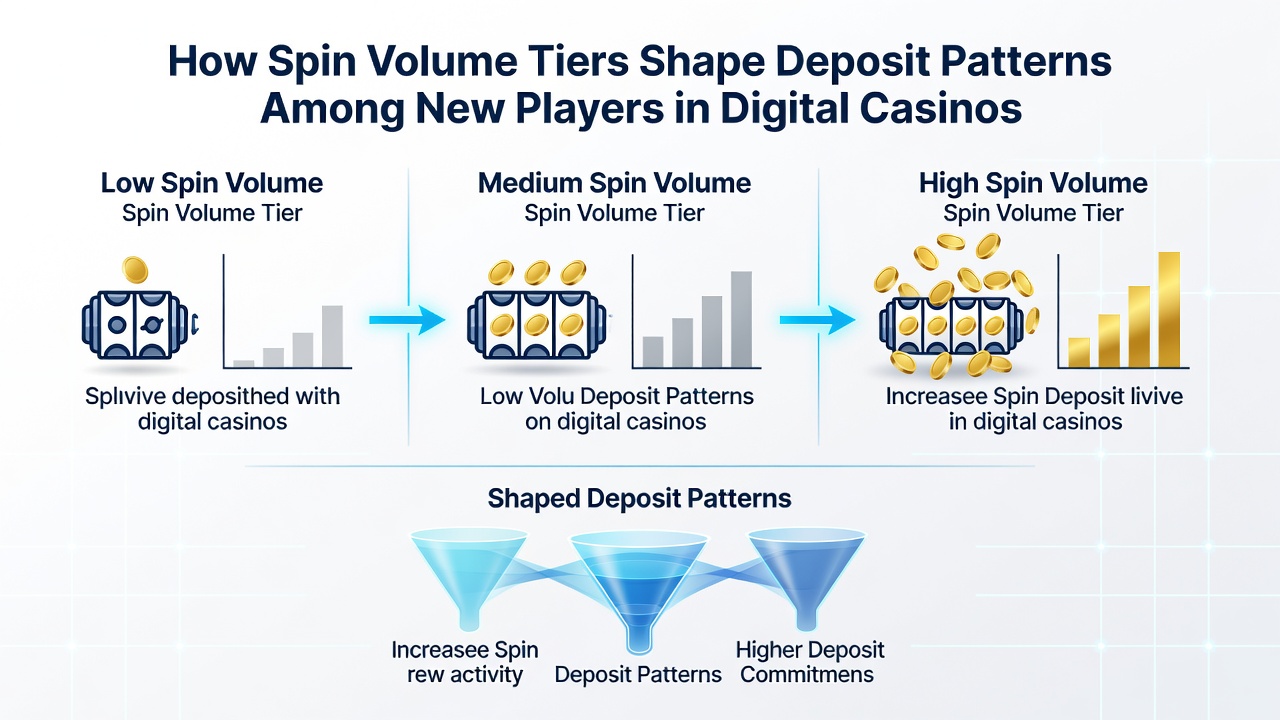
Once players enter higher spin volume categories, deposit patterns shift toward consistency rather than spikes around welcome offers. A study published by the University of Nevada, Reno's gaming research group in August 2026 tracked 12,000 new accounts and found that gold-tier players maintained weekly deposit totals within a narrower range than lower-tier counterparts, even as overall activity increased. The same dataset revealed that players who dropped below expected spin counts after tier advancement showed a measurable decline in deposit regularity over the following month.
Industry associations such as the European Gaming and Betting Association have compiled cross-operator comparisons that reinforce these observations. Their aggregated statistics demonstrate that tier-based notifications sent after significant spin milestones produce measurable lifts in deposit activity within 48 hours, particularly among players who joined within the previous 60 days. Operators adjust the timing and content of these notifications to align with observed patterns, creating feedback loops that further shape how new accounts distribute deposits across their early tenure.
Regional Variations in Tier-Driven Behavior
Deposit responses to spin volume tiers also vary by regulatory environment and player demographics. Accounts registered in jurisdictions with strict deposit limit options display more conservative adjustments when advancing tiers, whereas regions without mandatory caps show larger average deposit increases at the silver and gold levels. Canadian provincial data released through the Alcohol and Gaming Commission of Ontario for the period ending August 2026 highlighted that new players in tiered systems deposited 23 percent more frequently after crossing into silver status than comparable accounts in non-tiered environments.
Observers tracking these trends note that the visibility of spin counters on mobile apps accelerates tier awareness, which in turn compresses the time between deposits for many new users. This effect appears strongest during the first 10 days after registration, after which the pace of deposits stabilizes according to the tier achieved.
Conclusion
Spin volume tiers function as structured milestones that guide deposit timing and size among new digital casino players, with progression through the levels producing consistent shifts in funding behavior across multiple datasets. Reports from regulatory bodies and academic researchers through August 2026 confirm that these tier systems correlate with measurable changes in deposit frequency and amount, particularly during the critical early weeks of account activity. The patterns hold across different platforms and regions, underscoring the role that structured spin tracking plays in shaping how new players interact financially with digital casino environments.