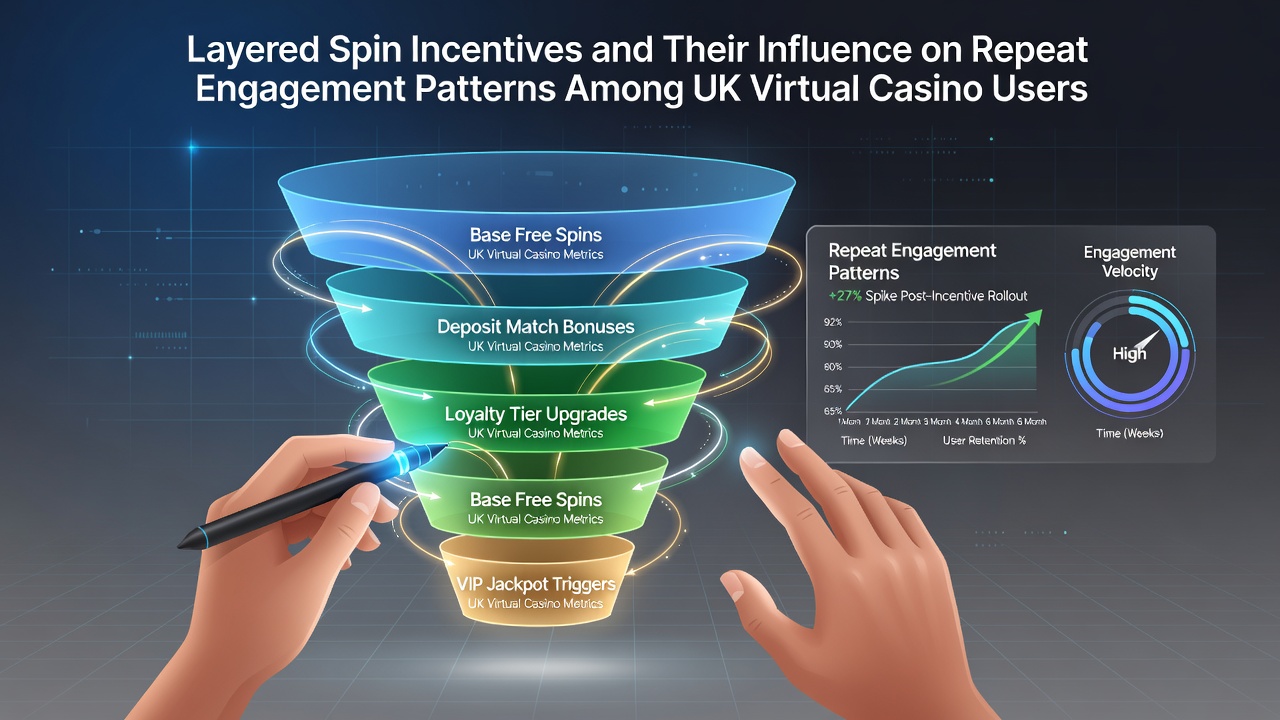
Examining Layered Spin Incentives and Their Influence on Repeat Engagement Patterns Among UK Virtual Casino Users
Layered spin incentives combine multiple tiers of free spins that activate across initial deposits, loyalty milestones, and promotional periods, and these structures shape how UK virtual casino users return to platforms over time. Operators design these incentives in sequences where basic spins unlock upon first funding while additional layers require repeated activity or accumulated play volume. Data from industry tracking services indicate that users exposed to three or more tiers demonstrate higher session frequencies within the first 90 days compared with those receiving single-tier offers.
Structure of Layered Spin Systems
Operators segment spin rewards into base, intermediate, and premium categories, and each category ties to specific user actions such as minimum deposits or game type selections. Base layers often deliver 20 to 50 spins on selected slots while intermediate layers add 50 to 100 spins after a second deposit within 14 days. Premium layers frequently require 30 days of activity or a set number of wagers before release. Research conducted by the Australian Gambling Research Centre shows that staggered release schedules maintain engagement across multiple weeks rather than concentrating activity in the opening seven days.
UK platforms adjust these tiers seasonally, and September 2026 data releases from several operators revealed a 12 percent rise in users progressing from base to intermediate layers after operators introduced time-limited multipliers on accumulated spins. These adjustments appear in promotional calendars that align with major sporting events or new game launches.
Observed Repeat Engagement Patterns
Tracking studies covering 2024 through mid-2026 document clear differences in return rates between users who receive layered offers and those who receive flat bonuses. Users who unlock at least two tiers visit sites an average of 4.2 times per month whereas single-tier recipients average 2.8 visits. Session duration also lengthens when users anticipate the next spin release, with average playtime increasing from 22 minutes to 37 minutes once intermediate tiers activate.
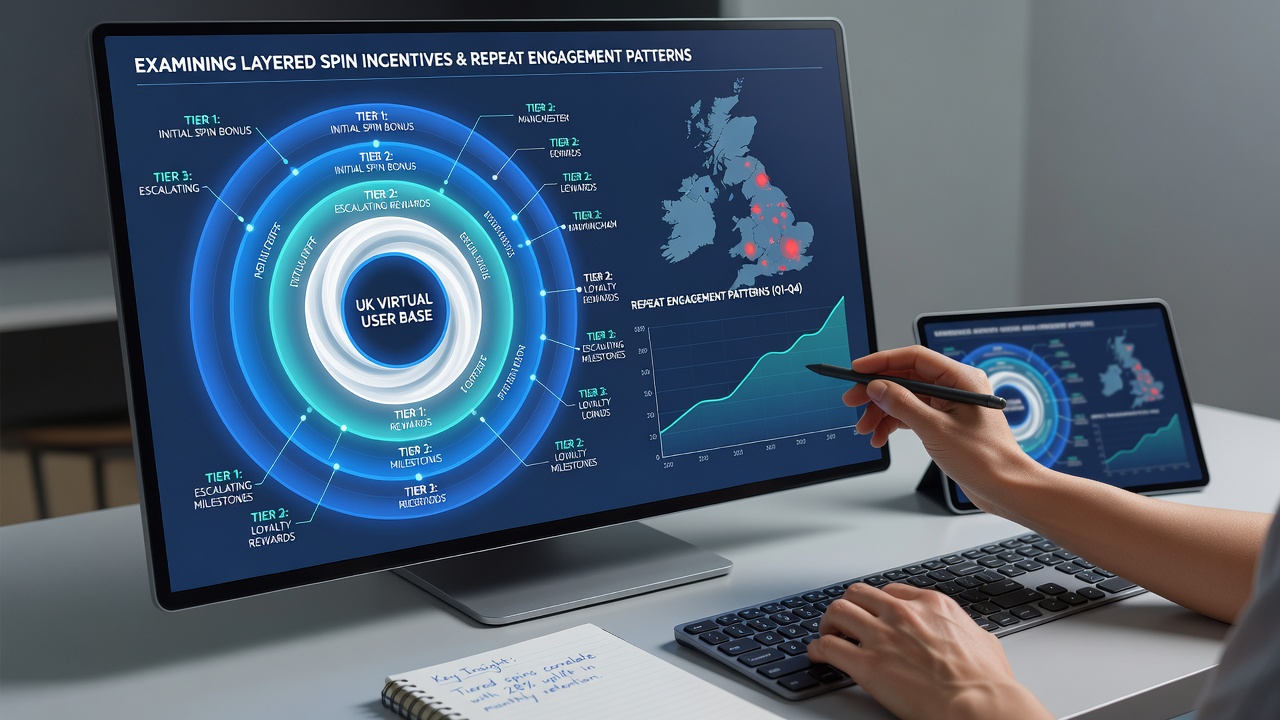
Payment method choice further influences these patterns. Users funding through e-wallets progress through tiers faster because transaction speed allows quicker qualification for subsequent layers. Card users show slower advancement yet maintain steadier long-term return rates once they reach premium tiers. Figures released by the National Center for Responsible Gaming in the United States highlight similar tier-progression effects across multiple regulated markets, confirming that incremental reward structures extend active account lifespans by an average of 18 days.
Demographic Variations in Response
Age groups respond differently to layered structures. Users aged 25 to 34 advance through tiers at the highest rate while those over 55 show lower progression but higher retention once they reach premium layers. Gender distribution remains balanced across tiers although female users demonstrate slightly higher completion rates for time-bound challenges attached to intermediate spins. Geographic concentration within the UK shows London and Southeast accounts advancing faster than regional accounts, a pattern linked to higher average deposit amounts rather than incentive design itself.
Measurement Approaches Used by Operators
Platforms employ cohort analysis to isolate the impact of each tier. Cohorts formed at the start of each calendar quarter allow direct comparison of users who receive two-tier versus four-tier offers. Metrics tracked include return-visit intervals, total spins redeemed, and cross-game exploration after tier unlocks. These measurements feed into automated systems that adjust future incentive depth for individual accounts based on observed progression speed.
External audits conducted by independent analytics firms verify that reported engagement lifts correspond to actual user behaviour rather than inflated session logging. One such review covering the first half of 2026 confirmed that layered incentives produced a measurable lift in 30-day retention across 78 percent of sampled UK operator cohorts.
Conclusion
Layered spin incentives operate through sequenced rewards that encourage repeated platform visits among UK virtual casino users. Available tracking data demonstrate consistent associations between tier progression and increased return frequency, longer session times, and extended account activity. Demographic and payment-method differences moderate these outcomes while operator measurement systems continue to refine incentive depth based on observed patterns.